

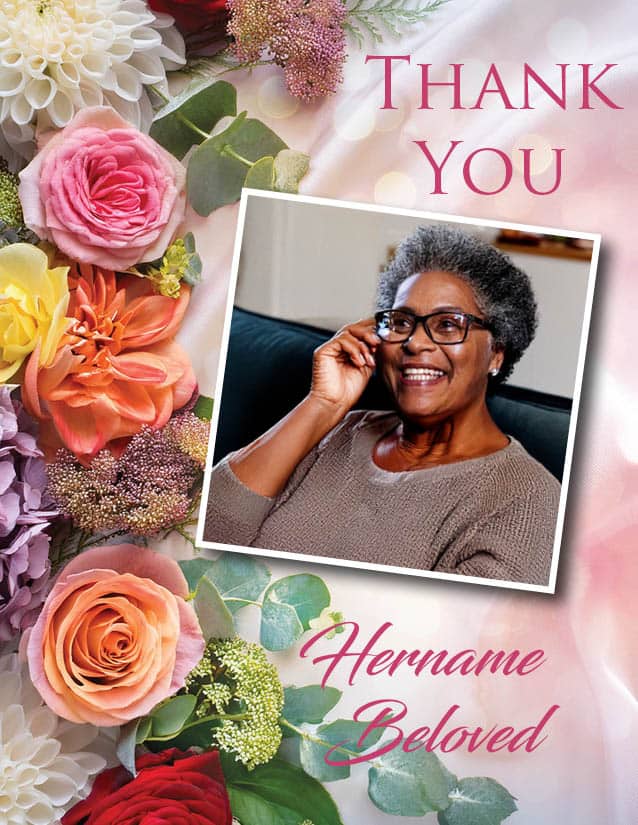
Funeral Thank You Card Etiquette: A Complete Guide
There are etiquette questions tied to nearly every major life event, weddings, the birth of a child, and funerals included. If you have recently said goodbye to someone you love, you have probably wondered about funeral thank you card etiquette, including who should receive one, when to send them, and whether a return address even matters on a card like this. Here are clear answers to the questions families ask most, along with guidance on what to actually write once you sit down with the cards in front of you.
Funeral Thank You Card Etiquette for Every Situation
A few core rules apply no matter who you are thanking or how the service went. Acknowledge the gestures that took real effort, keep the tone personal rather than formal, and do not let the pressure of finding perfect words stop you from sending something simple and sincere.
Who Should Receive a Funeral Thank You Card?
It helps to think in terms of effort rather than attendance. Plenty of people will show up to a service out of respect, and that alone does not require a written reply. The list below covers the people whose support went further than simply being present.
Several groups of people typically deserve a thank you card after a funeral:
- Anyone who had a role in the service, including pallbearers, speakers, and religious leaders
- People who donated money toward funeral costs, if applicable
- Anyone who gave to a charity or organization in your loved one’s memory
- Individuals who sent flowers, either to the family or to the service itself
- People who went above and beyond in other ways, including bringing food, helping with household tasks, or assisting with funeral arrangements
Keeping Track of Who to Thank
In the days after a loss, it is easy to feel like you are moving through a fog, and keeping track of who helped can slip through the cracks. A sign in book at the service is one of the simplest solutions, since it gives you a running list of who attended and often who sent flowers or food. At the service, take a few minutes to collect the small cards attached to flower arrangements, or snap a quick photo of each one with your phone before the flowers are moved or discarded.
Do You Need to Thank Everyone Who Sent a Sympathy Card?
Not necessarily. According to the Emily Post Institute, sympathy cards with no personal message, online condolence notes, and simple visits to the funeral home or service do not need to be acknowledged in writing. If someone wrote a personal note, made a donation, or sent flowers, a thank you is appropriate. If they signed a pre-printed card with no message, you are not obligated to respond, though there is nothing wrong with doing so if you feel moved to.
When Should You Send Funeral Thank You Cards?
There is no strict deadline, and most etiquette authorities agree that grief does not run on a clock. A reasonable guideline is to send cards within a month or two of the service, mostly because it becomes easier to forget the longer you wait. For a closer look at pacing yourself through the list and avoiding that last minute scramble, we break down timing in more detail separately.
Should Funeral Thank You Cards Be Handwritten?
Older etiquette rules insisted on fully handwritten notes, but that standard has relaxed. It is widely accepted to send pre-printed funeral thank you cards, as long as you add a short handwritten line specific to what you are thanking that person for. Something as simple as “Thank you for the beautiful flowers” or “Your support meant so much to our family” turns a generic card into something personal, without requiring you to handwrite dozens of full notes while you are still grieving.
Do You Put a Return Address on Funeral Thank You Cards?
Yes. A return address ensures the card finds its way back to you if it cannot be delivered, rather than disappearing into the mail permanently. If a card is returned to you, a quick phone call to the recipient is a good next step, both to thank them directly and to get an updated address if they have moved. Skipping the return address means you may never know a card did not arrive.
What to Write in a Funeral Thank You Card
This is usually the hardest part, and it is the question families search for most. The good news is that a good funeral thank you note follows a simple structure: a greeting, a specific thank you, one detail about what the gesture meant, and a warm closing. You do not need to write a paragraph. Two to four sentences is plenty.
Funeral Thank You Card Etiquette for Wording
A few short templates can make the blank space in front of you feel much less intimidating:
- For flowers: “Thank you for the beautiful flowers you sent. They brought so much comfort to our family during a difficult week.”
- For a donation: “We are deeply grateful for your generous donation in [Name]’s memory. It means a great deal to know their life touched so many.”
- For a pallbearer or special role: “Thank you for standing beside our family and serving as a pallbearer. It was an honor we will always remember.”
- For food, help, or general support: “Your kindness in bringing dinner during such a hard week did not go unnoticed. Thank you for thinking of us.”
Feel free to adjust the wording to sound like you rather than a template. A short, honest sentence in your own voice will always mean more to the recipient than something that sounds copied from a card shop.
What About Texts, Emails, and Digital Thank Yous?
Modern families often split the list between printed cards and a quick digital message, and that is generally fine. A close friend who sent a thoughtful text the day of the funeral may be perfectly happy receiving a warm reply by text rather than waiting on a mailed card. The deciding factor is usually how the original gesture arrived. Someone who mailed a handwritten sympathy card or dropped off flowers in person tends to expect a written note in return, while someone who reached out digitally will rarely be offended by a digital reply.
Out of town relatives or coworkers who could not attend but sent a gift or made a donation remotely still deserve a note, even if a phone call or video message feels more natural than mail. The format matters far less than making sure the gesture gets acknowledged in some form.
Frequently Asked Questions
What is proper funeral thank you card etiquette?
Proper etiquette means acknowledging anyone who made a real gesture of support, whether that is attending as a pallbearer, donating to a charity, sending flowers, or helping the family directly. A short, personal note matters more than a long or formal one, and there is no strict deadline for sending them.
What do you write in a funeral thank you card?
A funeral thank you card needs a greeting, a specific thank you naming what the person did, one brief detail about what it meant to your family, and a warm closing. Two to four sentences is typically enough, and a personal line matters more than polished wording.
Do you have to send a thank you card to everyone who sent a sympathy card?
No. Sympathy cards with no personal message, online condolence posts, and simple visits to the funeral home generally do not require a written thank you, according to etiquette authorities like the Emily Post Institute. A thank you is appropriate when someone wrote a personal note, donated, or sent flowers.
How soon should funeral thank you cards be sent?
There is no hard deadline. Sending cards within a month or two of the service is a reasonable guideline, mostly because it gets harder to follow through the longer you wait. No one will fault a family for taking time to grieve before sending them.
Is it okay to use pre-printed funeral thank you cards?
Yes. Pre-printed cards are widely accepted as long as you add a short handwritten line specific to what you are thanking that person for. This keeps the card personal without requiring a fully handwritten note for every recipient.
Finding the Right Funeral Thank You Cards
Choosing thoughtful funeral cards and matching thank you notes can make this part of the process feel a little lighter, especially when the design ties back to the keepsake guests already received at the service. Many families choose a coordinating set so the thank you note feels like a continuation of the tribute rather than an unrelated errand to check off.
Our full collection of memorial keepsakes is designed to make ordering simple during an already difficult time.
If you have questions about wording, quantities, or turnaround time, reach out to our compassionate team at 323-290-2555, Monday through Friday from 9 am to 5:30 pm, or call Tech Support at 888-349-2530 on weekends.


